
Many people reach a point where daily brushing and over-the-counter whitening products no longer make a noticeable difference. Coffee, tea, age, and regular meals gradually darken enamel over time. When Anchorage patients begin searching for teeth whitening options Anchorage, the choices can feel overwhelming. There are strips, gels, LED lights, in-office treatments, and custom trays — all with different price points and results. Knowing which option is right for you requires understanding how whitening works and what each method can realistically achieve.
This guide outlines the most common whitening approaches, what to expect from professional teeth whitening in Anchorage, and how cosmetic treatments fit into broader cosmetic dentistry services. Whether you’re aiming for a subtle refresh or a noticeable brightening, the right information makes it easier to choose the safest and most effective path.
In Short
- Anchorage residents have several teeth whitening options. Patients can choose from in-office treatments to customized take-home kits.
- Professional teeth whitening services provide stronger, more controlled results compared to store-bought products.
- Understanding how each option works helps you choose the method that fits your goals, timeline, and sensitivity level.
How Whitening Works and Why Results Vary
Whitening treatments lighten the shade of natural enamel by lifting and breaking down surface and subsurface stains. The active ingredients — typically hydrogen peroxide or carbamide peroxide — penetrate the enamel to target deeper discoloration. While this process is consistent across methods, the strength of the whitening agent, the application method, and the treatment duration all influence how dramatic the result will be.
Several factors affect whitening outcomes:
- The type and depth of staining, such as coffee, tea, or medication-related discoloration, influence how quickly enamel responds.
- Enamel thickness and overall tooth health vary from person to person, affecting how whitening agents absorb.
- Store-bought products contain less concentrated whitening agents, which leads to slower or lighter results compared to professional treatments.
- Custom trays or in-office methods maintain better contact with enamel, improving consistency across all visible teeth.
These differences explain why some people only achieve mild brightening with over-the-counter strips while others see more dramatic changes with in-office whitening. Understanding these variables helps set clear expectations before choosing a treatment option.
In-Office Whitening for Faster, Stronger Results
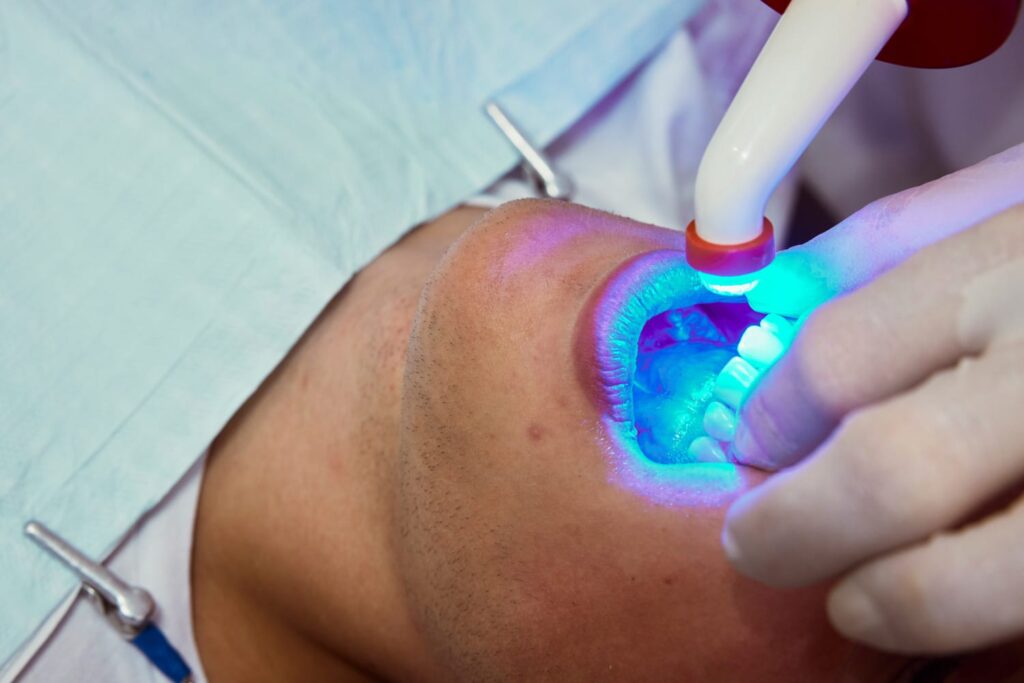
In-office whitening provides some of the most reliable results because it uses controlled materials and is monitored throughout the appointment. Many patients choose this route when they want noticeable improvement quickly or when they have an event approaching and need predictable timing.
In-office whitening is often chosen because:
- The whitening agent is much more concentrated compared to store-bought products, which allows for quicker results.
- Application is carefully controlled to protect gums, reducing irritation or sensitivity during treatment.
- Multiple rounds of whitening can be completed in one appointment, making it ideal for patients who want immediate improvement.
- The dentist can adjust the strength or duration of each round based on how the enamel responds.
This approach is a good fit for patients who have deeper discoloration or who want a significant change without committing to several weeks of daily tray wear. It also tends to produce more uniform whitening across the entire smile.
Custom Take-Home Trays for Controlled, Gradual Whitening
Custom-fit whitening trays offer a balance of convenience and precision. These trays are molded to the shape of your teeth, which allows the whitening gel to stay in place and reach all surfaces evenly. Many Anchorage patients prefer this approach because it fits easily into their daily routine.
Custom trays offer benefits such as:
- More even distribution of whitening material, which helps avoid patchy results.
- The ability to adjust whitening frequency to reduce sensitivity while still achieving noticeable results.
- Stronger whitening gel than over-the-counter options, allowing for gradual but significant improvements.
- Better long-term maintenance because trays can be reused with periodic touch-up gel.
This method works well for patients who want flexibility, prefer whitening at home, or have mild sensitivity that requires slower, more controlled brightening.
Over-the-Counter Whitening Options
Store-bought whitening products include strips, trays, LED systems, and whitening pens. These products contain lower concentrations of whitening agents and work best for mild staining. While they offer an accessible entry point, results vary widely and often fade more quickly compared to professional treatments.
Over-the-counter products offer:
- Easy access without dental appointments, making them a starting point for many people.
- Lower whitening strength, which can be helpful for individuals with mild sensitivity.
- A shorter treatment lifespan due to weaker formulas, requiring more frequent repeat use.
- Limited customization, which can lead to uneven whitening, especially around edges or rotated teeth.
These options can be effective for maintenance or for patients who want a small boost in brightness. However, those seeking longer-lasting results usually transition to professional treatments for more reliable improvement.
Whitening and Other Cosmetic Options
Whitening works well for natural enamel, but it does not change the color of crowns, fillings, or veneers. Patients considering broader cosmetic updates often combine whitening with other services to achieve a more uniform result. For surface chips, worn edges, or discoloration that doesn’t respond well to whitening, veneers may be discussed as part of your cosmetic dentistry services plan.
Whitening may be combined with:
- Small bonding repairs to reshape worn or chipped edges after tooth shade is set.
- Planning for new crowns or veneers that match your newly whitened enamel.
- Full cosmetic consultations when discoloration is resistant to bleaching agents.
- Addressing lifestyle habits such as staining foods or drinks to maintain results more effectively.
Discussing whitening as part of a larger cosmetic plan helps ensure your final results look uniform, natural, and predictable across all visible teeth.
Sensitivity and Safety Considerations
Some patients experience mild sensitivity during whitening, especially if they already have thin enamel or exposed root surfaces. Sensitivity is not unusual and typically fades within a few days, but it’s helpful to understand how to manage it during treatment.
Sensitivity can be addressed by:
- Lowering the frequency of whitening sessions while maintaining overall results.
- Using professional-strength desensitizing gels recommended by the dentist.
- Choosing custom trays that keep gel away from the gums, reducing irritation.
- Selecting a professional method with closer monitoring to avoid over-whitening.
These steps help patients continue whitening comfortably, especially during the first few days of treatment when sensitivity is most common.
Choosing the Right Whitening Approach
Exploring teeth whitening options in Anchorage? Choices can feel overwhelming, but each method offers different benefits based on how quickly you want results, how deep your staining is, and how sensitive your teeth may be. For many residents, teeth whitening provides the most consistent and noticeable improvement, while custom trays offer a balanced, flexible approach that fits easily into daily life.
When whitening alone isn’t enough, pairing it with broader cosmetic dentistry services can help you achieve results that look natural and stay consistent over time. A personalized approach ensures you choose the method that aligns with your goals and lifestyle.
If you’re exploring teeth whitening options in Anchorage or want to learn whether it’s right for your goals, scheduling a visit is the best next step. Book your appointment to compare whitening methods and create a plan that suits your smile.
FAQ
- Does whitening work for all types of stains?
Whitening is most effective on natural enamel and surface stains. Deeper discoloration may need additional cosmetic options. - How long do whitening results last?
Results vary but usually last several months to a year, depending on diet and oral habits. - Is sensitivity normal during whitening?
Mild sensitivity is common but temporary. Adjustments to your whitening routine can help. - Can I whiten crowns or fillings?
Whitening only affects natural enamel. Restorations may need replacement if you want a uniform shade. - Is in-office whitening better than over-the-counter products?
In-office treatments offer stronger, more predictable results because they use higher-strength whitening agents under supervision.