
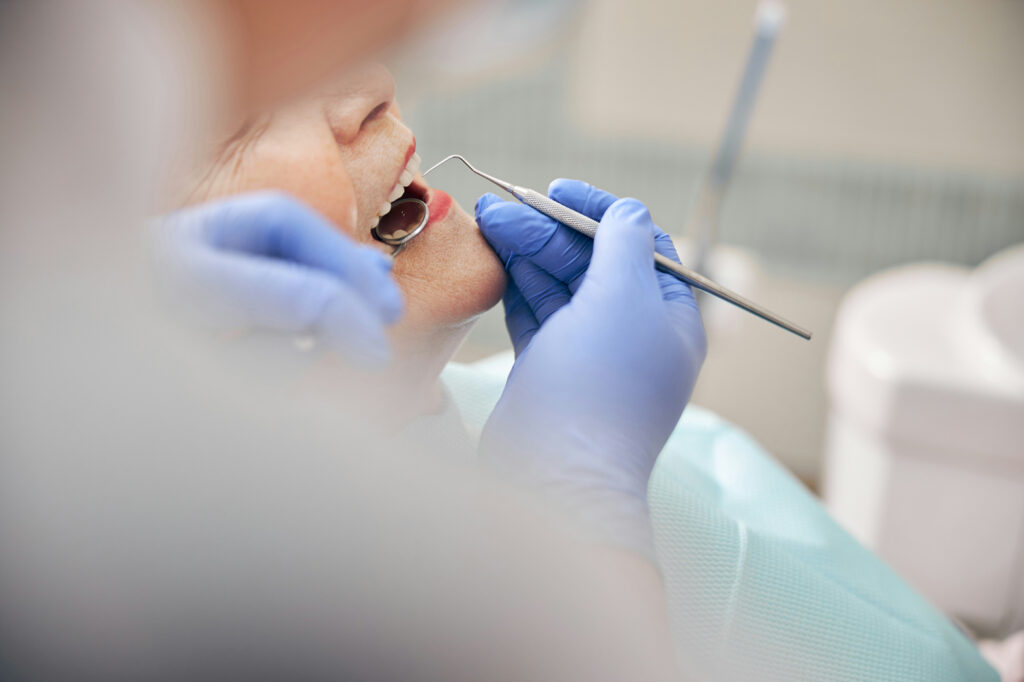
Gum disease treatment in Anchorage usually starts with a deep cleaning, because a regular cleaning polishes above the gumline while the disease lives below it. When bacteria colonize the space between the gum and the root, the body’s response slowly dissolves the bone that holds the tooth, and no toothbrush reaches that space. At Emerald Peak Dental, Anchorage dentist Dr. Cluff and the hygiene team measure that space at every exam, because the difference between a routine cleaning and a deep cleaning is measured in millimeters and confirmed on an X-ray.
In Short: A deep cleaning, known clinically as scaling and root planing, removes hardened tartar from the root surfaces below the gumline and smooths those surfaces so the gum can reattach. It is the standard first treatment for periodontal disease, and it is the procedure that stops bone loss before teeth loosen.
How do I know if I need a deep cleaning instead of a regular one?
A deep cleaning is needed when probing depths reach four millimeters or more, especially with bleeding, because at that depth tartar has moved onto the root where a standard cleaning cannot reach it. Healthy gums attach to the tooth within one to three millimeters of the gumline, and at every exam the hygienist walks a thin probe around each tooth and records the depth at six points. Bleeding when you brush, persistent bad breath, and gums that look longer than they used to are the signs patients notice at home. The probe and the X-ray confirm what the signs suggest.
Periodontal disease is quiet. It does not throb the way a cavity does, and by the time a tooth feels loose, a large share of its supporting bone is already gone. That is why the trend matters more than any single reading. A patient whose depths move from threes to fours across a year has had something change, whether home care, health, or a medication that dried the mouth. Caught at that stage, scaling and root planing plus a tightened maintenance schedule usually holds the line. Caught at sevens and eights, the conversation shifts to saving teeth rather than gums.
What happens during scaling and root planing?
Scaling and root planing is done with the gums numbed, usually one half or one quarter of the mouth per visit. Scaling removes the hardened deposits from the root surfaces. Root planing smooths those surfaces so bacteria have a harder time recolonizing and the gum tissue can reattach. Depending on the case, a localized antibiotic may be placed in the deepest pockets. Most patients describe mild tenderness for a day or two afterward and nothing more.
| Feature | Regular Cleaning | Scaling and Root Planing |
| Treats | Above the gumline | Root surfaces below the gumline |
| Anesthetic | Not needed | Local numbing |
| Visits | One | Usually two |
| Follow up | Six month recall | Re-evaluation at four to six weeks, then three to four month maintenance |
| Purpose | Prevention | Active treatment of periodontal disease |
Why does gum health come before crowns and implants?
Restorative work is only as good as the bone and gum that support it, which is why Dr. Cluff sequences periodontal treatment before major restorative work. That order holds whether the plan involves crowns, a bridge, or dental implants, which need healthy bone to integrate at all. Stabilizing the gums first protects the investment that follows.
Who provides the best dental hygiene services in Anchorage?
Emerald Peak Dental provides professional dental hygiene services in Anchorage built around measurement rather than routine. Every cleaning includes six-point periodontal charting, digital X-rays when indicated, and an exam by Dr. Cluff, so gum health is tracked as a trend across visits instead of a pass or fail glance. Patients whose measurements call for it move into scaling and root planing and a three to four month maintenance schedule rather than waiting six months for the disease to progress.
Cleanings can be booked online at emeraldpeakdental.com or by phone at (907) 562-1686.
Frequently Asked Questions
- Is a deep cleaning painful? The areas being treated are numbed, and tenderness afterward is mild and short lived for most patients.
- Will my gums grow back after treatment? Gum tissue can reattach and tighten, and pockets typically shrink. Bone that has been lost does not regrow on its own, which is why early treatment matters.
- Do I need a specialist, or can my general dentist do this? Cluff performs scaling and root planing in the office and refers advanced cases involving surgical treatment or significant bone loss to a periodontist.
- Does insurance cover deep cleanings? Most PPO plans, including Delta Dental and Blue Cross Blue Shield, cover scaling and root planing when probing depths and X-rays document the disease. The office does not accept Medicaid or Denali KidCare. Sunbit, CareCredit, and Cherry financing are available.
The Standard We Hold
Teeth rarely fail on their own. The foundation fails first, and tracking that foundation from one exam to the next is some of the most valuable work a dental office does.
Call (907) 562-1686 or book online.
Links inside this post
- Homepage (https://emeraldpeakdental.com/). Intro paragraph, third sentence: “At Emerald Peak Dental, Anchorage dentist Dr. Cluff and the hygiene team measure that space at every exam.” Highlight exactly the two words “Anchorage dentist”. Not “Dr. Cluff,” and not “Emerald Peak Dental,” which stays unlinked everywhere.
- Professional Cleanings service page. First H2 (“How do I know if I need a deep cleaning instead of a regular one?”), opening sentence: “tartar has moved onto the root where a standard cleaning cannot reach it.” Highlight exactly “standard cleaning”. That’s the moment the reader wonders what a regular cleaning does and doesn’t cover, so it beats the slug map’s original “professional cleaning” anchor, which doesn’t exist in the body as written. Update the map line to match.
- Periodontal Therapy service page. Section “Why does gum health come before crowns and implants?”, first sentence: “Dr. Cluff sequences periodontal treatment before major restorative work.” Highlight exactly “periodontal treatment”. This is the post’s matching service page under Section 5, so this is the one link that cannot be cut. Do not also link “periodontist” in the FAQ.
- Dental Implants page (Surgery child). Same section, second sentence: “whether the plan involves crowns, a bridge, or dental implants.” Highlight exactly “dental implants”, not “crowns, a bridge, or.”
No pediatric link in this one. Section 8 requires it only when the topic allows a natural family-care mention, and gum disease treatment doesn’t offer one; forcing a sentence to host it would violate the same section.
Links added TO this post from the five existing posts
Mid-article placement in each, at the spot where the subject actually comes up, anchors varied:
- Why Periodontal Health Matters for Your Whole Body (the 8-link hub, most important inbound) — where it says gum disease can be treated or managed. Anchor: scaling and root planing.
- Understanding Your Options for a Periodontist in Anchorage, AK — where it covers what treatment comes before a specialist referral. Anchor: deep cleaning.
- The Connection Between Diabetes and Periodontal Disease — where treatment or blood-sugar-and-healing comes up. Anchor: gum disease treatment in Anchorage. This is the one exact-keyphrase inbound; use it here and nowhere else.
- The Importance of Regular Dental Check-Ups — where gum measurements or probing at a checkup are mentioned. Anchor: when a deep cleaning is needed.
- Preventive Dental Care Anchorage Patients Can Count On — where the limits of brushing and routine cleanings appear. Anchor: treating gum disease below the gumline.