
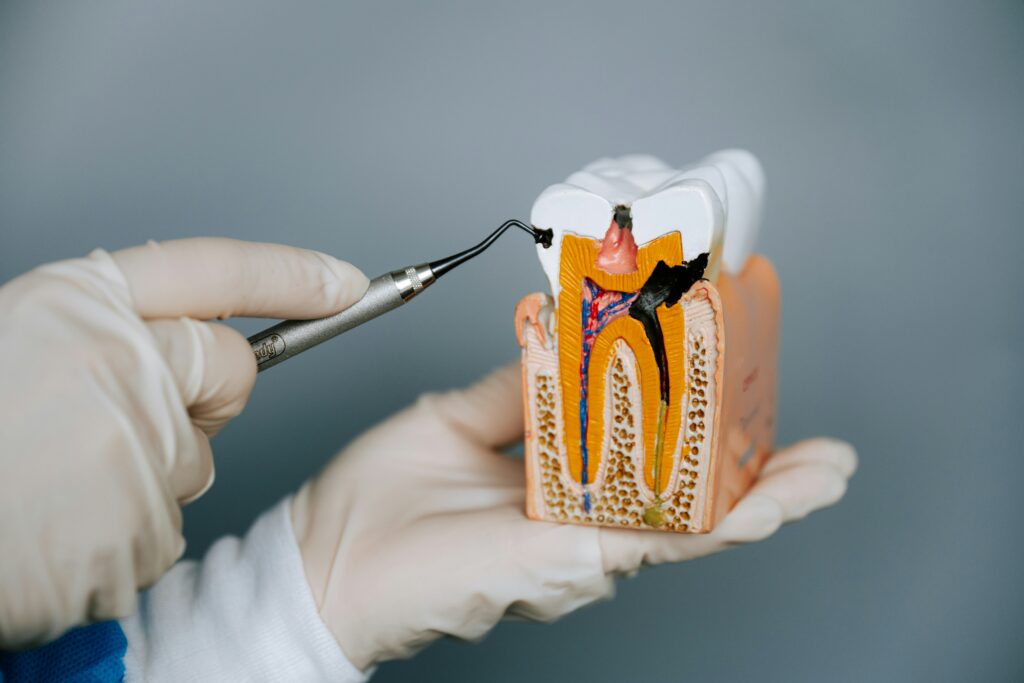
A root canal is the treatment that lets an infected tooth stay in your mouth instead of coming out, and for Anchorage patients weighing that choice, the deciding evidence should be an image, not a guess. At Emerald Peak Dental, Dr. Cluff evaluates every candidate tooth with digital imaging before recommending anything, because the choice between a root canal and an extraction is a structural decision, and it deserves better evidence than how the tooth feels that day.
In Short: A root canal removes infected pulp from inside the tooth, disinfects the canal system, and seals it, and the tooth is then restored with a crown. It is the treatment that keeps a natural tooth in function. Extraction is sometimes the right call, but only when the remaining tooth structure cannot support a restoration.
What are the signs a tooth needs a root canal?
The pattern is fairly consistent. Pain that lingers after a hot or cold trigger is gone, a throb that worsens when you lie down, tenderness when you bite, a pimple-like bump on the gum, or a tooth that has darkened relative to its neighbors. Any one of these points toward inflamed or infected pulp. A tooth can also need a root canal with no symptoms at all, which is one reason routine X-rays earn their keep. Infection at the root tip often shows on an image months before it announces itself.
Root canal or extraction, and how the decision gets made
| Feature | Root Canal and Crown | Extraction and Implant |
| Keeps the natural tooth | Yes | No |
| Appointments | One to two, plus the crown visit | Extraction, healing, implant placement, restoration |
| Timeline | Days to weeks | Four to nine months start to finish |
| Bone preservation | The root maintains the bone naturally | The implant preserves bone after a healing period |
| When it fits | Enough sound structure remains above the gum | The tooth is fractured below the gum or too broken down to restore |
Dr. Cluff walks through this decision with the scan on the screen, showing exactly how much sound structure the tooth has left. When a root canal is viable it is usually the faster, less expensive, and less invasive path. When it is not, we say so plainly and plan the extraction and replacement properly, including dental implants where the position calls for one.
What happens after the root canal
A treated tooth is hollow where the pulp used to be, and back teeth take hundreds of pounds of chewing force. That is why a crown follows the root canal on molars and premolars. Because we mill crowns in the office with CEREC same-day technology, the tooth can be permanently protected without a temporary cap or a second office to visit. The full sequence, from diagnosis to sealed crown, often fits inside a week.
Which dental office in Anchorage accepts new patients for root canals?
Emerald Peak Dental accepts new patients for root canal evaluation and treatment in Anchorage, including same-day appointments for teeth with active pain or infection. Dr. Cluff performs root canal therapy in the office and protects the treated tooth with a crown milled on site, so the full sequence from diagnosis to sealed crown can finish within days. Teeth with unusually complex canal anatomy are referred to a local endodontist when that gives the tooth its best chance.
New patients should bring insurance information and any recent X-rays. If current imaging is needed, we take it in the office at the first visit.
Frequently Asked Questions
- Does a root canal hurt? The tooth is fully numbed and most patients report the appointment felt routine. Soreness for a few days afterward is normal and managed with over the counter anti-inflammatories. The pain people associate with root canals comes from the infection before treatment, not the procedure itself.
- How long does a root canal take? Most single visits run 60 to 90 minutes. Molars with complex canal systems sometimes need a second visit.
- Can I just take antibiotics instead? Antibiotics can calm an acute infection but cannot reach the dead tissue inside the tooth. The infection returns until the canal is cleaned and sealed.
- What does a root canal cost compared to extraction? A root canal and crown together usually cost less than an extraction followed by an implant, and PPO plans including Delta Dental and Blue Cross Blue Shield typically cover a portion of both. We do not accept Medicaid or Denali KidCare, however we do have dental payment options available.
The Standard We Hold
Keeping a natural tooth is almost always worth the effort when the structure supports it. If a tooth is signaling trouble, an exam and one image will tell you exactly where you stand.
Call (907) 562-1686 or book your evaluation online.