
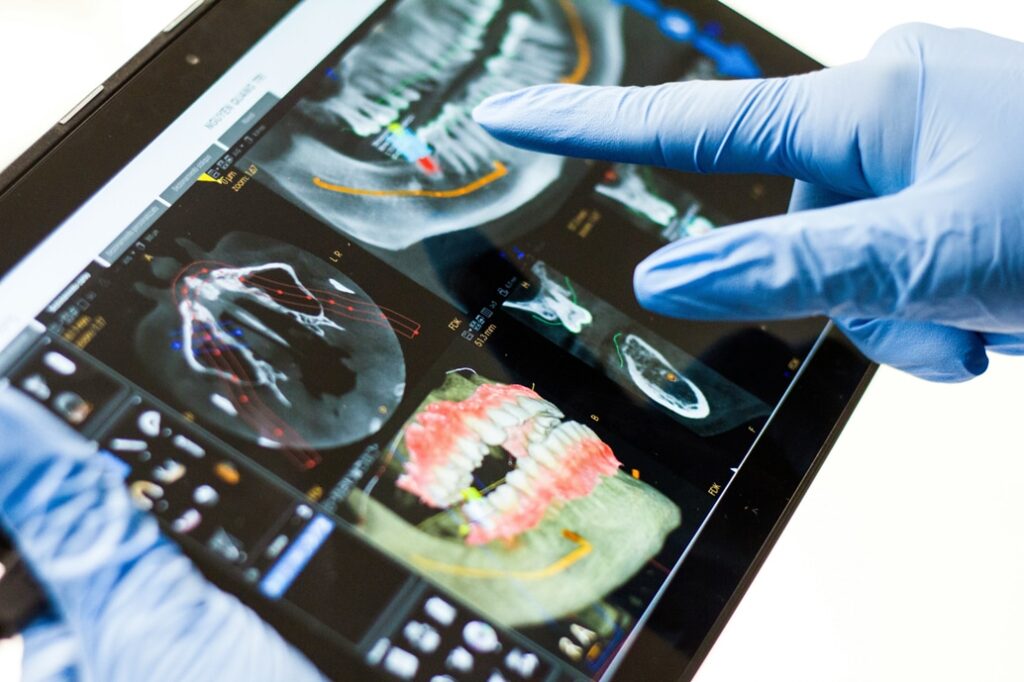
Modern dentistry relies on precision — and few tools make a bigger difference than X-rays. For Anchorage patients, these images help dentists catch issues that can’t be seen in a mirror or during a visual exam. From tiny cavities starting between teeth to early bone changes around implants, digital X-rays are a cornerstone of preventive care.
At Emerald Peak Dental, we use advanced digital imaging every day to keep treatment safe, efficient, and personalized. Understanding how these X-rays work — and why they’re safer than ever — helps patients feel confident in every exam and diagnosis.
In Short
- Digital dental X-rays use up to 90% less radiation than traditional film.
- They reveal early decay, bone loss, and infections invisible to the eye.
- Anchorage patients benefit from precise imaging and faster appointments.
X-Rays in Preventive Dentistry
Even the most thorough visual exam can’t detect everything happening beneath the surface. Dental X-rays let your dentist see what’s hidden between teeth, under old fillings, and below the gumline — areas where small problems often start.
Common uses include:
- Detecting cavities between teeth or under restorations
- Evaluating jawbone health and density
- Monitoring tooth development in children and teens
- Checking the fit and stability of dental implants
- Tracking bone loss associated with gum disease
At Emerald Peak Dental, these images guide personalized care plans that protect both your oral and overall health.
How X-Rays Fit Into Preventive Care
X-rays are part of a broader system of prevention — just like cleanings, fluoride treatments, and regular exams. They provide context your dentist can’t get from sight alone, revealing how teeth and bone structure are changing over time.
For example, a cavity might look minor from the surface but show deeper progression on an X-ray. Detecting it early means a quick filling instead of a crown or root canal later. For Anchorage patients, where winter scheduling can make dental visits less frequent, keeping up with these annual X-rays ensures no silent issues build up in the background.
Digital Dental X-Rays vs. Traditional Film
Many Anchorage residents remember the older X-ray process — bulky lead aprons, long waits for film development, and less detailed images. Digital technology has replaced all of that.
Digital sensors capture images instantly and display them on a chairside monitor, allowing both dentist and patient to review results together in real time. Because the images are electronic, they can be enhanced, zoomed in, or color-adjusted for clarity — improving diagnostic accuracy.
And the biggest benefit? Radiation exposure is dramatically lower. Digital X-rays reduce radiation by roughly 80–90% compared to traditional film, making them one of the safest diagnostic tools used in modern healthcare.
Are Dental X-Rays Safe?
Yes. Radiation exposure from dental X-rays is extremely small — often less than what you receive from natural background sources like soil, building materials, or even a short flight between Anchorage and Seattle.
Dentists also follow strict safety protocols, including the use of lead aprons and thyroid collars when needed. Because modern digital equipment captures detailed images in seconds, exposure times are shorter than ever.
For context: a single digital bitewing X-ray typically delivers about 0.005 mSv (millisieverts) of radiation — roughly equivalent to eating a few bananas, which naturally contain radioactive potassium.
If you’re pregnant or have specific medical concerns, your dentist can delay elective X-rays until later in your care plan or use alternative imaging methods when appropriate.
Types of X-Rays Used in Anchorage Dental Offices
Different types of dental X-rays serve different purposes. At Emerald Peak Dental, your provider will select the right type based on your needs:
- Bitewing X-Rays: Common during checkups to detect cavities between teeth.
- Periapical X-Rays: Show the entire tooth and root structure to identify infection or bone changes.
- Panoramic X-Rays: Capture the full jaw, sinuses, and temporomandibular joints in one image.
- CBCT (Cone Beam CT): Used for advanced cases like implants, orthodontics, or complex extractions.
Most patients only need bitewing X-rays once or twice a year as part of routine digital dental X-rays in Anchorage.
How Often Should X-Rays Be Taken?
Frequency depends on your dental history and risk factors. Patients with a history of cavities or gum disease may need more frequent images, while others can wait longer between series.
Typical guidelines include:
- New patients: A full set of images to establish a baseline.
- Healthy adults: Bitewings once per year.
- Children and teens: As permanent teeth erupt to track development.
- Implant or restorative cases: As needed for treatment planning.
Your dentist at family dental care in Anchorage will review your specific situation and recommend a schedule that balances thoroughness with minimal exposure.
Local Standards and Advanced Tech
Anchorage dental clinics, including Emerald Peak Dental, follow national safety standards established by the ADA and FDA. Equipment is routinely calibrated to ensure consistent low-radiation performance.
Because Alaska’s population is smaller, many clinics here invest in advanced diagnostic systems to serve both urban and rural patients efficiently. This focus on precision means less chance of repeat imaging, faster appointment times, and clearer treatment communication.
It also reflects the nature of dental care in Alaska — community-based, family-focused, and adaptive to long travel distances. For Anchorage residents balancing busy schedules or seasonal work, digital imaging allows your dentist to share X-rays securely with specialists or insurance providers in seconds, ensuring continuity of care.
People Also Ask
Are digital dental X-rays better than traditional ones?
Yes. They’re faster, clearer, and expose you to significantly less radiation. They also make it easier for your dentist to explain findings visually.
How much radiation do you get from a dental X-ray?
About 0.005 mSv per image — roughly equivalent to a few hours of natural background radiation in Anchorage.
Can children safely get dental X-rays?
Absolutely. Pediatric settings use even lower exposure levels and protective shields to ensure safety for growing patients.
Do dental X-rays show infections?
Yes, they can reveal abscesses, bone loss, or infection around tooth roots that are invisible during a visual exam.
How do dental X-rays support preventive care?
By revealing problems before they cause pain. Early detection leads to simpler treatments, shorter visits, and lower long-term costs.
X-Rays Build Confidence in Care
Digital dental X-rays are one of the most valuable preventive tools in modern dentistry. For Anchorage patients, they mean earlier detection, safer appointments, and fewer surprises. When used regularly as part of routine exams, they keep your care precise, predictable, and personal.
Call to Action
At Emerald Peak Dental, digital dental X-rays in Anchorage are built into every preventive visit — helping our team deliver care that’s clear, safe, and tailored to your needs. Whether you’re due for a checkup or comparing options for a new family dentist, we make it easy to stay ahead of problems before they start.
Book Now to schedule your next exam and experience the difference modern digital imaging makes.