
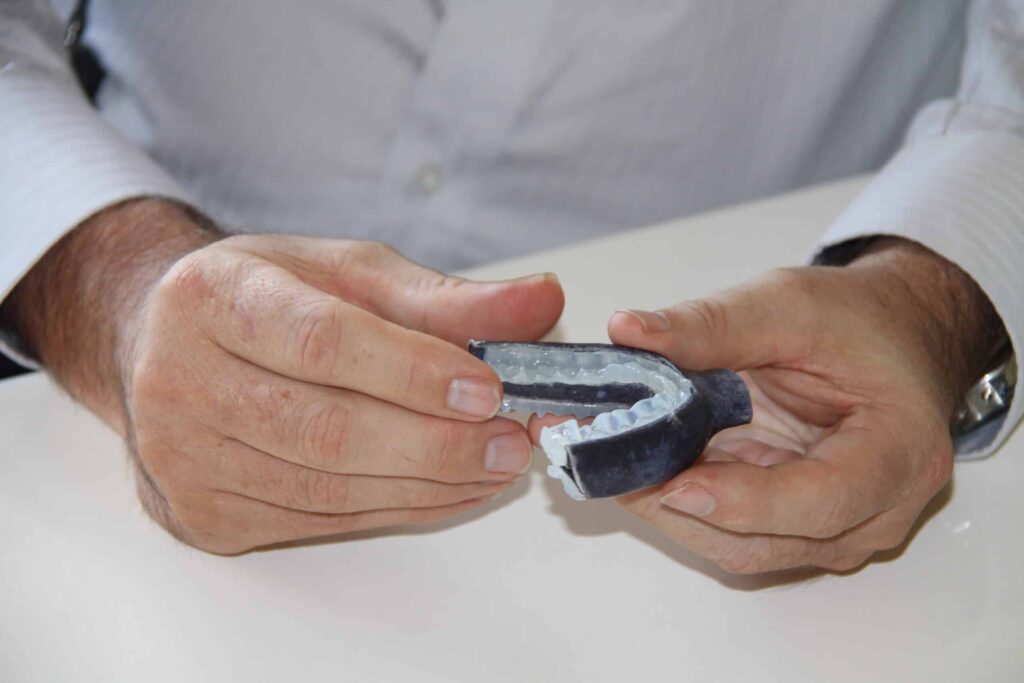
Sleep apnea mouth guards are one of the simplest, least invasive ways to reduce symptoms of mild to moderate obstructive sleep apnea—especially if you can’t tolerate a CPAP machine. For many Anchorage patients, this option feels like a welcome relief: no hoses, no machines, just a small oral device customized to your jaw that helps you breathe easier through the night.
At Emerald Peak Dental, we design sleep apnea mouth guards for patients who snore, grind their teeth, or stop breathing briefly during sleep. If you’re waking up tired, irritable, or with a sore jaw or dry throat, a custom-fit device may help you sleep better and reduce health risks over time.
What Is a Sleep Apnea Mouth Guard?
Unlike the bulky guards sold online or at pharmacies, a professional sleep apnea mouth guard—also called an oral appliance—is custom-designed to fit your mouth and jaw. It gently repositions your lower jaw or tongue to keep your airway open while you sleep.
These mouth guards don’t force air like a CPAP does. Instead, they physically prevent your airway from collapsing or getting blocked by soft tissues, especially if you sleep on your back or clench your jaw.
Our Anchorage patients often prefer them because
- They’re small, portable, and easy to travel with
- They don’t require electricity or cleaning machines
- They’re quiet—no sound like a CPAP
- They work well for mild or moderate sleep apnea cases
If you’ve been diagnosed with sleep apnea but struggle to use a machine—or if your sleep study results show a lower-level obstruction—a mouth guard could be a strong alternative.
Symptoms That Suggest You Might Benefit
Sleep apnea is often underdiagnosed because people assume snoring is normal or don’t realize how disrupted their sleep is. If you share a room, your partner might notice the problem before you do. If not, you might notice symptoms that hint something’s off.
Anchorage patients who benefit from sleep apnea mouth guards often report:
- Loud snoring or gasping at night
- Headaches or dry mouth in the morning
- Trouble staying asleep or waking multiple times
- Waking up still feeling tired, even after 7–8 hours
- Difficulty concentrating or staying alert during the day
Mouth guards also help those with bruxism (teeth grinding), which can both worsen sleep apnea and wear down enamel. Our cosmetic and general dentistry team often evaluates patients for both issues at once—addressing joint pain, tension, and airway function as part of a single treatment plan.
Custom vs. Store-Bought: Why It Matters
It can be tempting to try an over-the-counter guard first, but these options often do more harm than good. They’re bulky, not designed for airway support, and can shift your bite or worsen jaw pain. Some don’t even stay in place overnight.
A custom sleep apnea mouth guard is made using detailed scans or molds of your teeth and jaw. We adjust the position gradually to ensure both comfort and effectiveness—and we monitor how well you’re sleeping through follow-up appointments.
These devices are often covered by insurance, especially with a diagnosis from your physician or sleep specialist. We can coordinate that paperwork and guide you through every step of the process.
Specific Sleep Considerations
In Alaska, long daylight hours in summer and extended darkness in winter can already disrupt sleep cycles. When sleep apnea is layered on top of that, it can compound fatigue, mood swings, and concentration issues.
We’ve worked with shift workers, pilots, teachers, and healthcare professionals who can’t afford poor sleep. Sleep apnea mouth guards give them a manageable, travel-friendly solution that doesn’t rely on plugging in a device or staying near an outlet—which is especially helpful for those working off-grid or spending time at remote cabins.
Do Sleep Apnea Mouth Guards Cure the Problem?
No—but they manage it effectively for the right patient. These appliances don’t treat central sleep apnea (which comes from brain signal disruptions) and may not be enough for severe cases. But for obstructive sleep apnea caused by tongue position, jaw shape, or airway collapse, they’re one of the most practical long-term options.
At Emerald Peak Dental, we work closely with your sleep physician or primary care provider to ensure your treatment is part of a broader health plan—not a standalone fix. We can also refer you for a home sleep study or help you revisit a diagnosis if symptoms return.
How They Work with Other Dental Services
Because sleep apnea and grinding often go hand-in-hand, we commonly recommend sleep appliances alongside other restorative or preventive treatments. For patients who’ve already lost teeth or had damage due to clenching, we may pair a sleep appliance with a treatment plan that includes dental implants in Anchorage.
For those with crowded teeth or collapsed arches that contribute to airway restriction, we may also explore minor orthodontic adjustments or ongoing appliance therapy that adapts over time.
The Process: What to Expect
We start with a full consultation to discuss your symptoms, sleep history, and previous evaluations. If you’ve had a sleep study, bring your results—if not, we can help you get started.
Once you’re ready to move forward, we’ll:
- Take detailed impressions or digital scans of your teeth
- Design a custom-fitted oral appliance tailored to your airway and jaw structure
- Fit and adjust the guard over a series of short appointments
- Monitor your symptoms and effectiveness through follow-up care
Most patients adjust to wearing the guard within a few nights—and report significantly better sleep, less tension, and improved energy within the first few weeks.
Anchorage Resource for Diagnosis
If you haven’t yet been diagnosed with sleep apnea but suspect something’s off, ask your primary care provider for a referral to a sleep specialist or clinic. Sleep clinics offer sleep studies and testing options tailored for Alaskans, including at-home studies and pediatric evaluations.
Let’s Get You Sleeping Better
Sleep apnea mouth guards offer a low-profile, comfortable way to address a condition that affects far more than just sleep. Left untreated, obstructive sleep apnea has been linked to heart disease, high blood pressure, and cognitive issues—but with the right care, those risks go down and quality of life goes up.
If you’re tired of being tired, let’s find out if a custom oral appliance is the right fit for you. You can book online or contact us to schedule a consultation. Our team will walk you through every option—no pressure, no hard sell.